Biotech breakthroughs turning garage ideas into unicorn companies
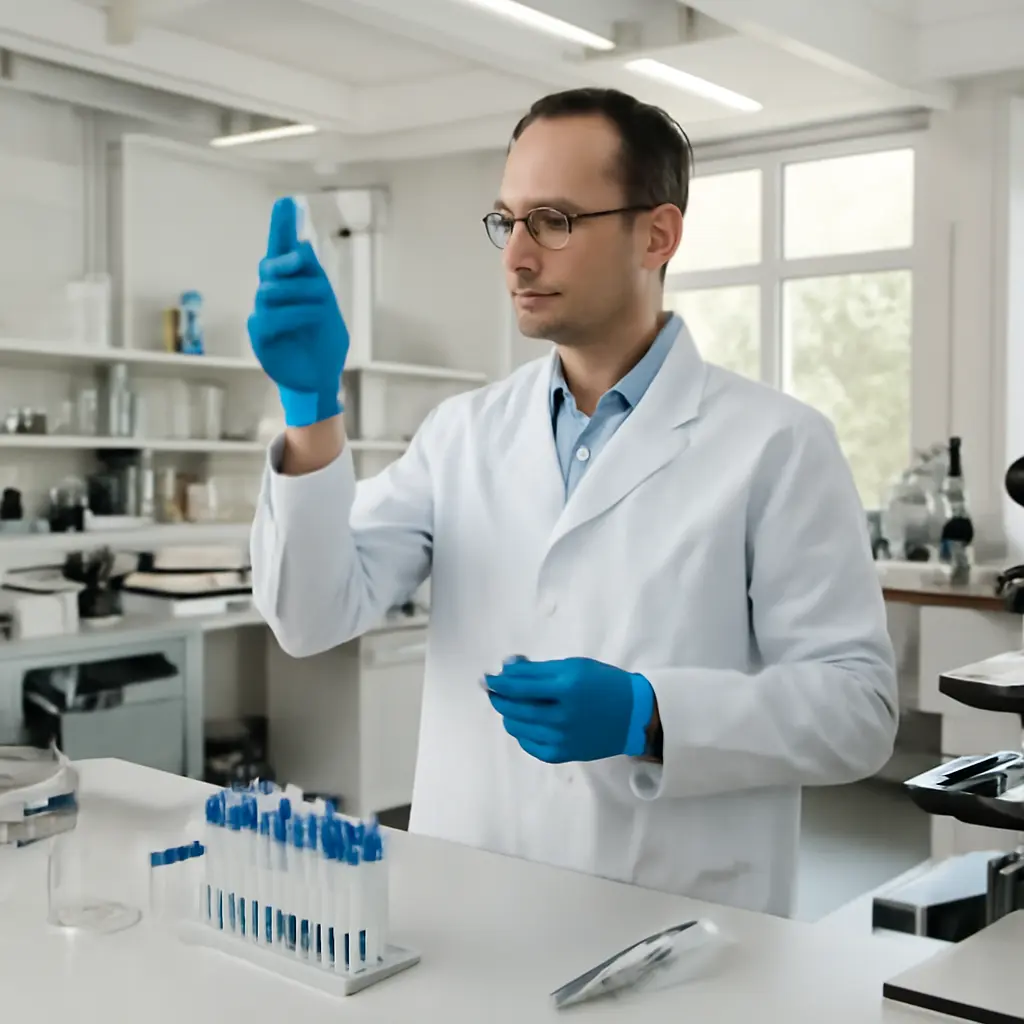
Biotech breakthroughs are turning garage ideas into unicorn companies when founders translate a promising biological insight into a product that can be tested, manufactured, regulated, and sold. In this context, a “unicorn” is a privately held startup valued at $1 billion or more. The path is rarely a lone inventor’s overnight success: it combines advances in gene editing, synthetic biology, AI-enabled drug discovery, and lab automation with venture capital, experienced teams, and lengthy clinical and regulatory processes. Recent examples such as Ginkgo Bioworks and Recursion show both the scale of the opportunity and the difficulty of converting bold science into durable commercial value.
How biotech breakthroughs become startup opportunities
Biotechnology applies living systems, cells, or biological molecules to create products and services. The U.S. National Human Genome Research Institute describes biotechnology broadly as technology based on biology, used to address challenges across medicine, agriculture, and other fields. A biotech breakthrough becomes a company opportunity when a research result can be turned into a repeatable solution to a valuable problem—not merely an interesting laboratory observation.
The commercial stakes are substantial, but the numbers need context. PitchBook and the National Venture Capital Association’s 2024 U.S. Venture Monitor reported that U.S. venture investment across all sectors reached about $209 billion in 2024; that figure is not biotechnology-specific and should not be mistaken for capital available to any one startup. Meanwhile, the U.S. Food and Drug Administration’s Center for Drug Evaluation and Research approved 50 novel drugs in 2024, illustrating the continuing flow of new medicines through a highly selective regulatory system. The FDA count covers novel drugs reviewed by CDER, not every biologic or medical technology.
Biotech breakthrough commercialization: the science-to-market bridge
Biotech commercialization is the process of converting a scientific discovery into a product or service that can be validated, manufactured, authorized where required, and adopted by customers. The National Institutes of Health’s technology-transfer offices describe this work through activities such as invention disclosure, intellectual-property protection, licensing, and formation of startups. In practice, the bridge links laboratory evidence to customer need, product design, financing, and regulatory strategy.
Translational research and proof of concept
Translational research moves findings from basic science toward practical applications, including diagnostics, medicines, and research tools. A startup’s first proof of concept should answer a specific question: does the technology work reproducibly in a relevant model, and does it outperform or meaningfully improve on existing approaches? For a drug candidate, that may require evidence of biological activity, selectivity, and an acceptable early safety profile; for a laboratory platform, it may mean reliable performance across samples and users.
The National Center for Advancing Translational Sciences (NCATS) emphasizes that moving discoveries into health solutions requires coordination across research, development, and clinical testing. This is why a garage-scale prototype is a starting point rather than a finished product. Researchers must establish reproducibility, document methods, and test whether results survive outside the conditions in which the original idea was developed.
Intellectual property, licensing, and university spinouts
Intellectual property (IP) includes patents, trade secrets, and other protections that can give a company time to develop and commercialize an invention. University spinouts often license technology developed with public or institutional research support, then build a company around a defined application. A patent alone does not establish product-market fit, freedom to operate, or a viable business; it is one element of the company’s defensibility.
The Bayh-Dole Act of 1980 enabled U.S. universities and other eligible institutions to retain ownership of inventions arising from federally funded research, subject to statutory conditions. The Association of University Technology Managers (AUTM) tracks licensing and startup activity in its annual surveys, documenting how academic inventions can move into commercial ventures. A credible spinout typically pairs a clear license and development plan with founders who understand the scientific, regulatory, and customer requirements.
Regulation, manufacturing, and clinical evidence
Regulatory strategy is the plan for showing that a product meets the applicable standards for safety, effectiveness, quality, and manufacturing. Drug and biologic developers may need to conduct preclinical studies and staged clinical trials, while diagnostics and devices follow pathways that depend on their intended use and risk. The FDA’s 50 novel-drug approvals in 2024 provide a useful annual snapshot of one part of this landscape; they do not represent all products entering or progressing through development.
Manufacturing is equally decisive. A therapeutic that works in a small research batch must be made consistently at larger scale under appropriate quality systems. The U.S. Food and Drug Administration’s current good manufacturing practice requirements address controls over facilities, processes, and records. For startups, building these capabilities early can reduce the risk that promising experimental results cannot be reproduced in clinical or commercial production.
Biotech breakthrough platforms powering startup formation
The strongest startup opportunities often arise from platform technologies: reusable methods that can generate multiple products or serve many customers. Platform businesses can spread research costs across programs, but they must still prove that the platform produces useful outcomes—not just large datasets or impressive demonstrations. Several technology categories have lowered the barrier to launching biotech companies while creating new scientific and commercial challenges.
Gene editing and programmable biology
Gene editing changes DNA at selected locations, while programmable biology uses genetic instructions to alter how cells behave. CRISPR-based tools helped make genome editing more accessible and adaptable. The 2020 Nobel Prize in Chemistry recognized Emmanuelle Charpentier and Jennifer Doudna for developing a method for genome editing, marking a major scientific milestone that helped catalyze research and company formation.
A prominent real-world example is CRISPR Therapeutics, co-founded by Doudna’s scientific collaborator Emmanuelle Charpentier’s research network and other biotech leaders. In December 2023, the FDA approved Casgevy, developed by Vertex Pharmaceuticals and CRISPR Therapeutics, as the first FDA-approved therapy using CRISPR/Cas9 genome editing, for eligible patients with sickle cell disease. The milestone validates a therapeutic application, but it also highlights practical hurdles: complex treatment delivery, specialized clinical centers, manufacturing logistics, long-term follow-up, and affordability.
Synthetic biology and engineered organisms
Synthetic biology designs or redesigns biological components and systems to perform useful functions. Companies may engineer microbes to produce chemicals, materials, food ingredients, or therapeutic molecules. This approach can replace or supplement processes that rely on fossil feedstocks or complex chemical synthesis, but commercial success depends on yield, cost, quality control, and the ability to scale fermentation or other production processes.
Ginkgo Bioworks is a high-profile example of a company built around organism engineering and biological design services. It went public through a special purpose acquisition company in 2021 and reported 2024 revenue of approximately $170 million in its annual filing, while also reporting substantial operating losses. Its history illustrates a key lesson: a large valuation or public listing does not by itself prove that a platform has achieved profitable, repeatable economics. For synthetic-biology startups, customer contracts, production performance, and cash runway matter as much as the technical vision.
AI-enabled drug discovery and biological data
AI-enabled drug discovery applies machine learning to tasks such as identifying targets, predicting molecular properties, designing candidate molecules, and interpreting biological data. It can help researchers prioritize experiments, but it does not eliminate the need for laboratory validation, clinical trials, or regulatory review. The quality and relevance of training data, reproducibility, and prospective testing determine whether computational predictions translate into useful medicines.
Recursion Pharmaceuticals combines automation, high-content biological imaging, and machine learning to study cellular responses at scale. It became a public company in 2021 and has pursued collaborations with major pharmaceutical firms. Recursion’s model demonstrates how a startup can build value around data generation and drug-development partnerships rather than a single laboratory discovery. However, partnership announcements and data volume are intermediate indicators; clinical progress and eventual product performance remain the harder tests.
Lab automation and cloud laboratories
Lab automation uses robotics, software, and standardized workflows to perform experiments more consistently and at greater throughput. Cloud laboratories provide remote access to experimental equipment and services, allowing teams to run tests without building a full facility. These models can reduce early capital requirements, especially for computationally oriented founders, though they cannot remove the need for specialized expertise, sample handling, quality systems, and careful experimental design.
The National Institutes of Health’s emphasis on reproducible research reinforces why automation can matter: standardized procedures can improve consistency and make experiments easier to document. Yet automation is not a substitute for scientific judgment. A poorly designed assay can produce misleading results faster when automated, so startups need independent validation and transparent protocols.
Biotech breakthrough funding and the unicorn valuation question
A unicorn is a privately held startup valued at $1 billion or more in a financing transaction, a definition popularized by venture capitalist Aileen Lee in 2013. Valuation is a negotiated estimate of a company’s worth, not cash in the bank, annual sales, or proof of scientific success. Biotech valuations are particularly sensitive to clinical data, intellectual-property strength, market size, financing conditions, and the likelihood that a product can reach patients.
Venture capital and milestone financing
Venture capital funds high-risk companies in exchange for equity, often releasing capital across financing rounds as the company reaches milestones. Biotech milestones can include validating a target, nominating a development candidate, filing an investigational application, beginning a clinical trial, or reporting meaningful trial results. A staged approach can help investors and founders manage uncertainty, but it also means a startup may need repeated fundraising before it generates product revenue.
The 2024 U.S. Venture Monitor from PitchBook and NVCA recorded approximately $209 billion in U.S. venture investment across sectors. Because that total includes technology and other industries, it is a broad market indicator rather than a measure of biotech funding. Biotech founders should evaluate financing against their own development timeline: a company approaching clinical testing may face very different capital needs from a software-supported research-tools business.
Partnerships, licensing, and non-dilutive capital
Pharmaceutical partnerships can provide research funding, milestone payments, and access to development or commercialization expertise. Licensing transfers rights to a technology or product in exchange for agreed compensation, while non-dilutive funding—such as eligible grants—can support research without immediately reducing founder ownership. These routes can complement venture investment, although partnership terms may limit a startup’s control over programs or markets.
The National Cancer Institute’s Small Business Innovation Research and Small Business Technology Transfer programs are examples of federal support for qualifying U.S. small businesses conducting research and development. Such awards can help validate an early concept, but they are competitive and typically do not fund every expense required to build a commercial company. Founders should treat grants as part of a financing plan, not a replacement for customer discovery or later-stage capital.
Why a unicorn valuation is not the finish line
A high private valuation can attract talent and capital, but it can also create expectations that exceed the evidence. In biotech, a company may spend years developing a product before revenue arrives, and a failed trial can sharply reduce its prospects. Public-market performance, subsequent financing terms, product approvals, and commercial adoption offer different tests of value than a headline private valuation.
Ginkgo Bioworks and Recursion illustrate different versions of the challenge: both built ambitious platforms and achieved major financing or public-market milestones, but neither platform’s scale alone guarantees sustained profitability. The prudent question is not simply whether a startup can become a unicorn; it is whether it can deliver measurable benefits, maintain financial resilience, and build a business that can survive beyond successive funding rounds.
From garage idea to biotech company: a practical roadmap
A garage idea can become a credible biotech venture only when it is matched with suitable facilities, qualified people, and evidence appropriate to the product. Founders should avoid moving sensitive biological work into unregulated spaces: biosafety, human-subject protections, data integrity, and applicable institutional rules must come first. The following sequence helps turn an initial insight into a testable company plan.
-
Define the problem and user. Identify who experiences the problem, how it is handled today, and what measurable improvement the proposed solution could deliver.
-
Test the scientific premise. Design reproducible experiments, use appropriate controls, and seek independent replication before making broad claims.
-
Map the product and regulatory pathway. Clarify whether the offering is a drug, biologic, diagnostic, device, research tool, or industrial product, since each category has distinct requirements.
-
Secure rights and assemble expertise. Review patent ownership and licensing, then recruit scientific, clinical, regulatory, manufacturing, and commercial experience suited to the development stage.
-
Build a milestone-based financing plan. Estimate the capital and time needed to reach each value-inflecting experiment or development milestone, including contingencies for delays and negative results.
-
Validate demand and scale. Interview customers, clinicians, or partners; assess manufacturing economics; and test whether the proposed product can be delivered reliably at a price and scale the market can support.
A useful illustration is the difference between a compelling technology and a compelling business. Casgevy demonstrated that genome editing can become an approved therapy, but its specialized delivery and manufacturing requirements mean the product’s impact depends on access and implementation as well as scientific efficacy. Similarly, an engineered microbe may perform well in a bench experiment yet fail commercially if production costs remain too high. The strongest startups address these practical constraints early.
Conclusion: building durable biotech breakthroughs
Biotech breakthroughs become valuable companies through a connected chain: translational research establishes proof of concept; IP and licensing support a defensible venture; regulation and manufacturing make products usable; platforms such as gene editing, synthetic biology, AI, and automation expand what small teams can attempt; and financing provides time to reach evidence-based milestones. The examples of Casgevy, Ginkgo Bioworks, and Recursion show both the power of these approaches and the gap between technical promise, commercial sustainability, and a unicorn valuation.
The broader implication is that biotech entrepreneurship can turn fundamental discoveries into tools, treatments, and industrial solutions—but only when scientific rigor is matched by responsible development and realistic economics. Researchers considering a startup should begin with a real unmet need, seek technology-transfer and regulatory guidance early, validate claims independently, and build a team capable of carrying the idea from experiment to adoption. For further reading, consult FDA guidance, NIH and NCATS translational resources, AUTM’s licensing surveys, and venture-market reports.
Sources: National Human Genome Research Institute, Biotechnology, https://www.genome.gov/genetics-glossary/Biotechnology; U.S. Food and Drug Administration, Novel Drug Approvals for 2024, https://www.fda.gov/drugs/development-approval-process-drugs/novel-drug-approvals-2024; PitchBook and National Venture Capital Association, 2024 Q4 PitchBook-NVCA Venture Monitor, https://nvca.org/venture-monitor/; National Center for Advancing Translational Sciences, Translational Science Spectrum, https://ncats.nih.gov/about/about-translational-science/spectrum; Association of University Technology Managers, AUTM Licensing Activity Survey, https://autm.net/surveys-and-tools/surveys/licensing-survey; U.S. Food and Drug Administration, Quality Considerations for Continuous Manufacturing, https://www.fda.gov/regulatory-information/search-fda-guidance-documents/quality-considerations-continuous-manufacturing; Nobel Prize, The Nobel Prize in Chemistry 2020, https://www.nobelprize.org/prizes/chemistry/2020/summary/; U.S. Food and Drug Administration, FDA Approves First Gene Therapies to Treat Patients with Sickle Cell Disease, https://www.fda.gov/news-events/press-announcements/fda-approves-first-gene-therapies-treat-patients-sickle-cell-disease; Ginkgo Bioworks, 2024 Annual Report, https://investors.ginkgobioworks.com/financials/sec-filings/default.aspx; Recursion Pharmaceuticals, 2024 Annual Report, https://ir.recursion.com/financials/sec-filings/default.aspx; Aileen Lee, Welcome to the Unicorn Club: Learning from Billion-Dollar Startups, https://techcrunch.com/2013/11/02/welcome-to-the-unicorn-club/; National Cancer Institute, Small Business Innovation Research and Small Business Technology Transfer Programs, https://sbir.cancer.gov/.