How VOC Test Enhances Risk Management in Business Operations
Effective risk management in business operations requires precise assessment of potential hazards related to product safety, regulatory compliance, and environmental impact. One critical tool facilitating this is the voc test, which evaluates the emission of volatile organic compounds from materials and products. Incorporating voc testing into risk management protocols enables organizations to identify harmful emissions early, mitigate health risks, and ensure adherence to industry standards.
Understanding the Role of Emission Testing in Hazard Identification
Volatile organic compounds (VOCs) are chemicals that readily vaporize into the air, often originating from paints, adhesives, plastics, and other materials used in manufacturing and product development. The voc test quantifies these emissions, which can pose risks ranging from acute health effects to long-term environmental damage. By systematically measuring VOC levels, businesses gain critical insight into potential areas of operational risk that may affect worker safety, product quality, and regulatory compliance.
Implementing the Voc Test as Part of Compliance Strategy
Many industries face stringent regulations on permissible VOC emissions, such as automotive, construction, and consumer goods. Applying the voc test ensures products meet these legal thresholds, reducing risks associated with non-compliance, including fines, recalls, and reputational damage. Integration of voc testing within quality control processes also supports sustainable manufacturing practices by monitoring chemical emissions in production phases.
Key Steps in Conducting a Voc Test
- Sample Selection: Choose representative product samples or material batches for consistent testing.
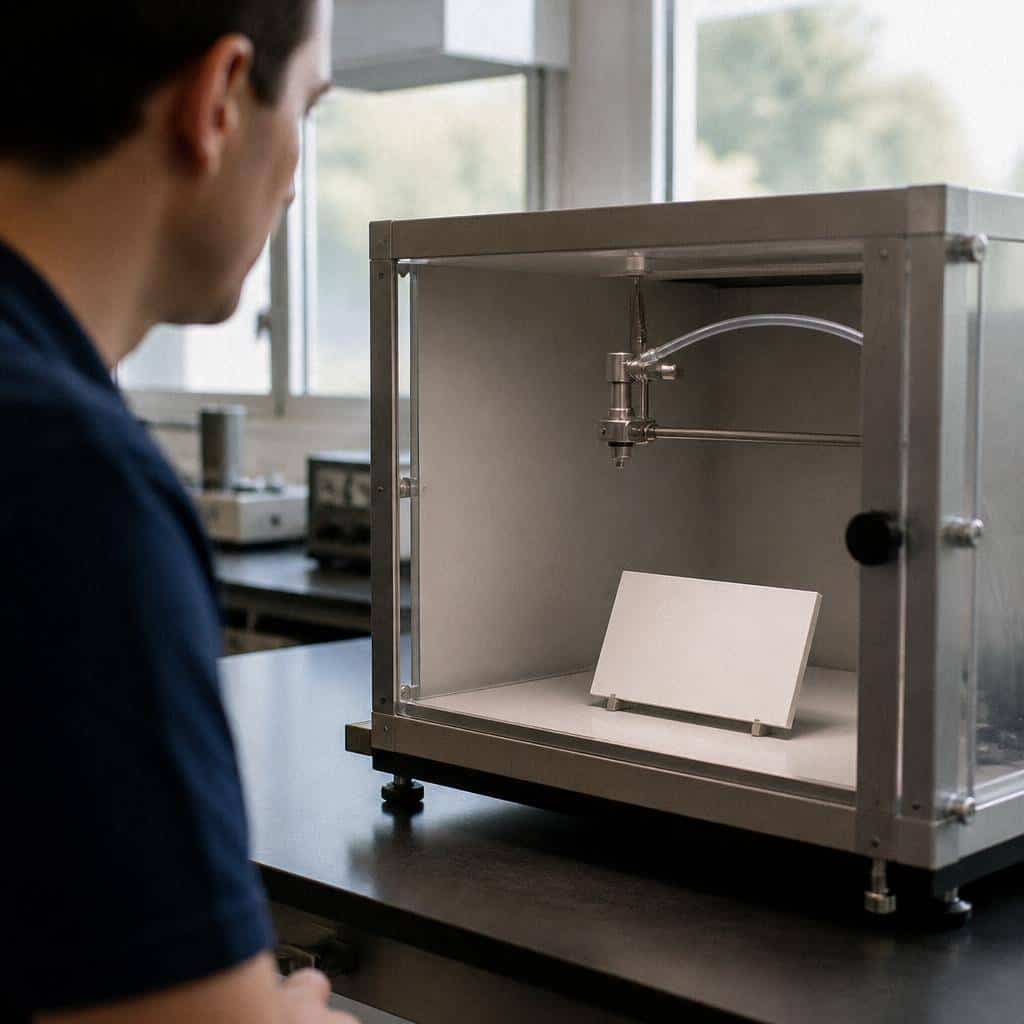
- Testing Environment Preparation: Use controlled chambers or enclosures to capture VOC emissions under standardized conditions.
- Analytical Measurement: Employ gas chromatography-mass spectrometry (GC-MS) or similar instrumentation to identify and quantify volatile compounds.
- Data Interpretation: Compare results against regulatory limits and internal benchmarks to assess risk levels.
- Reporting and Documentation: Maintain detailed records supporting compliance audits and continuous risk evaluation.
Criteria for Selecting a Voc Testing Provider
Choosing a competent testing partner is pivotal for accurate risk assessment. Essential criteria include:
- Accreditation and Standards Compliance: Ensure the laboratory adheres to recognized standards such as ISO 12219 for automotive interiors or VDA 278 protocols.
- Technical Expertise: Access to advanced analytical technologies and skilled personnel familiar with industry-specific requirements.
- Turnaround Time and Reporting: Timely delivery of comprehensive, clear reports that facilitate prompt decision-making.
- Customization and Consultation: Availability of tailored testing programs and expert guidance on interpreting results and mitigating risks.
Integration of Voc Test Results into Risk Management Frameworks
Once voc test data is obtained, businesses must translate findings into actionable risk controls. This may involve reformulating materials, enhancing ventilation systems, or implementing stricter supplier evaluation criteria. Continuous monitoring through periodic emissions testing allows companies to verify the effectiveness of risk mitigation measures and adapt strategies accordingly.
Advanced risk management systems incorporate voc test outcomes alongside other environmental and safety data to provide a comprehensive perspective on operational hazards. This integrative approach supports proactive decision-making and aligns with corporate governance and sustainability commitments.
Organizations can find detailed insights on industry-relevant testing standards and methodologies by consulting specialized resources that cover voc test requirements for sectors such as automotive interiors.
Challenges and Limitations in Utilizing Emission Tests
Despite the benefits, voc testing presents challenges that impact its role in risk management:
- Variability in Test Conditions: Differences in environmental parameters or sample preparation can influence emission readings.
- Complexity of Chemical Mixtures: Identifying and quantifying multiple VOCs within complex matrices requires sophisticated analytical methods.
- Cost and Resource Demand: Comprehensive testing programs may require substantial investment and specialized technical support.
Understanding these limitations is crucial for interpreting results appropriately and integrating them effectively within broader risk management systems.
Future Trends in Emission Testing and Risk Management
Emerging technologies and regulatory updates continue to shape the evolution of voc testing. Innovations in real-time monitoring and sensor technologies promise faster data acquisition, facilitating more dynamic risk assessment. Meanwhile, tightening environmental regulations underscore the growing importance of emission testing as a foundational element of corporate risk management policies.
Adopting these advancements supports continuous improvement in operational safety and compliance, enabling businesses to anticipate and respond to risks more effectively.
Related Post

What Great Startup Advisors Actually Bring to the Table
Startup Advisors — Strategic Leverage: What Great Startup Advisors Actually Bring to the Table A [...]
The Growing Role of Corporate Venture Client Models Today
Corporate venture client models are demand-led innovation systems in which an established company becomes an [...]